Every Page is a Landing Page
Many visitors won't see your homepage first. With AI search and Google surfacing deep links directly, every page on your site needs to work as a complete introduction to your brand.
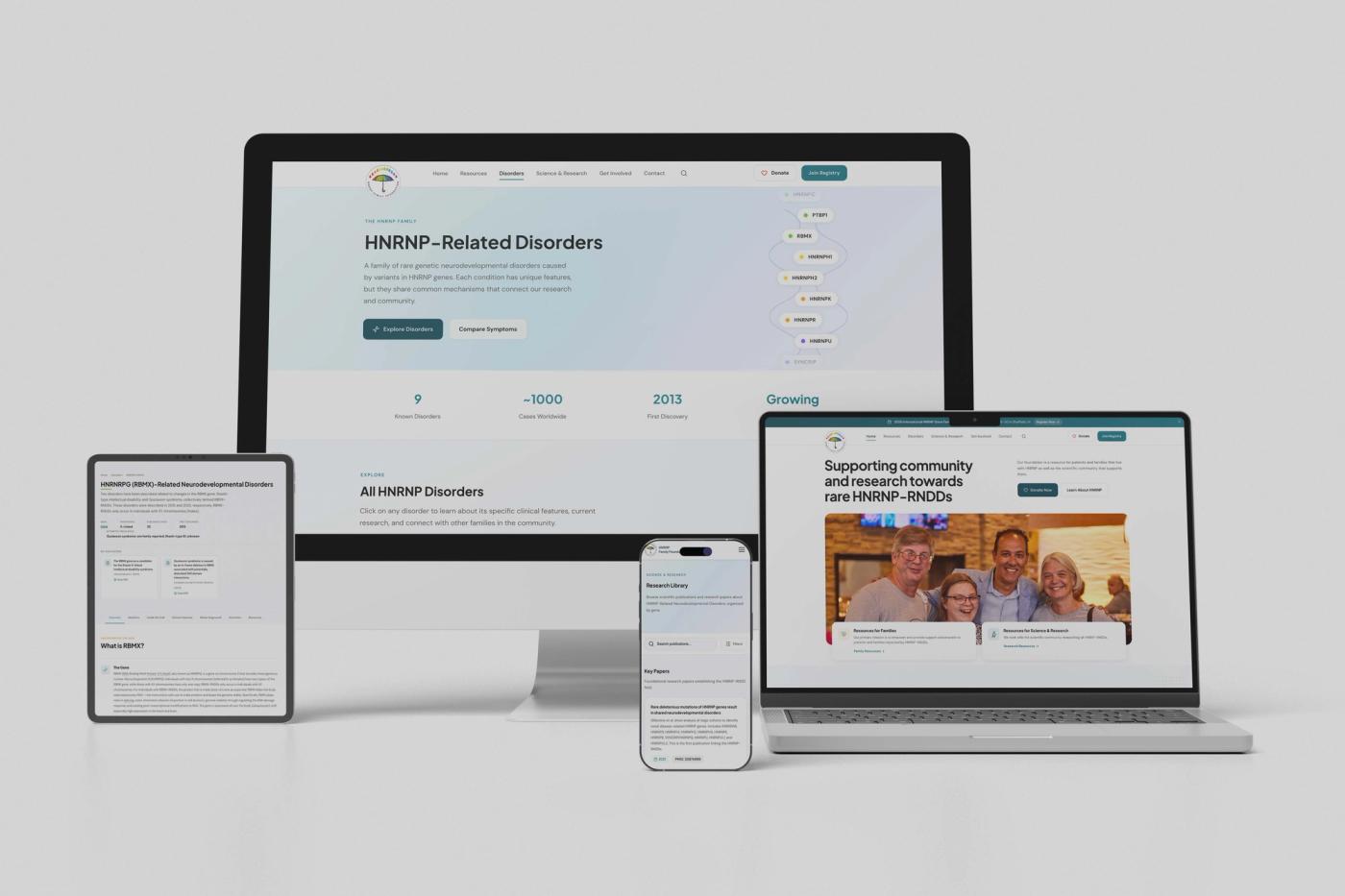
There is a mental model that drives a lot of website design decisions, and it goes something like this: visitors arrive at the homepage, get oriented, and then navigate from there to wherever they need to go. The homepage is the front door. Everything else is inside.
It is an intuitive model. It is also, increasingly, wrong.
The reality of how people find and arrive at websites has shifted substantially over the past several years, and the pace of that shift is accelerating. Search engines and now AI-powered search tools do not route users to front doors. They route them to answers. And those answers usually live on interior pages of your website. Think along the lines of a blog post, a service description, a research summary, or an about page. The visitor who finds your website through a search query is often not starting at the beginning of your story. They are entering it somewhere in the middle.
This has direct consequences for how websites should be designed and maintained. Every page on your site is, functionally, a landing page. Every page needs to welcome a stranger, communicate who you are, and tell that person where to go next.
How Search Has Always Worked and Why It Is Changing Faster Now
Before the rise of AI-powered search, the multi-entry-point reality of web traffic was already well established. Organic search has consistently driven more than half of all web traffic - BrightEdge's research puts the share at around 53 percent - and the overwhelming majority of that traffic is non-branded. Someone searching for "nonprofit grant application tips" or "website speed and SEO" is not searching for your business. They are searching for an answer, and if one of your pages provides it, they will land there with no prior context about who you are.
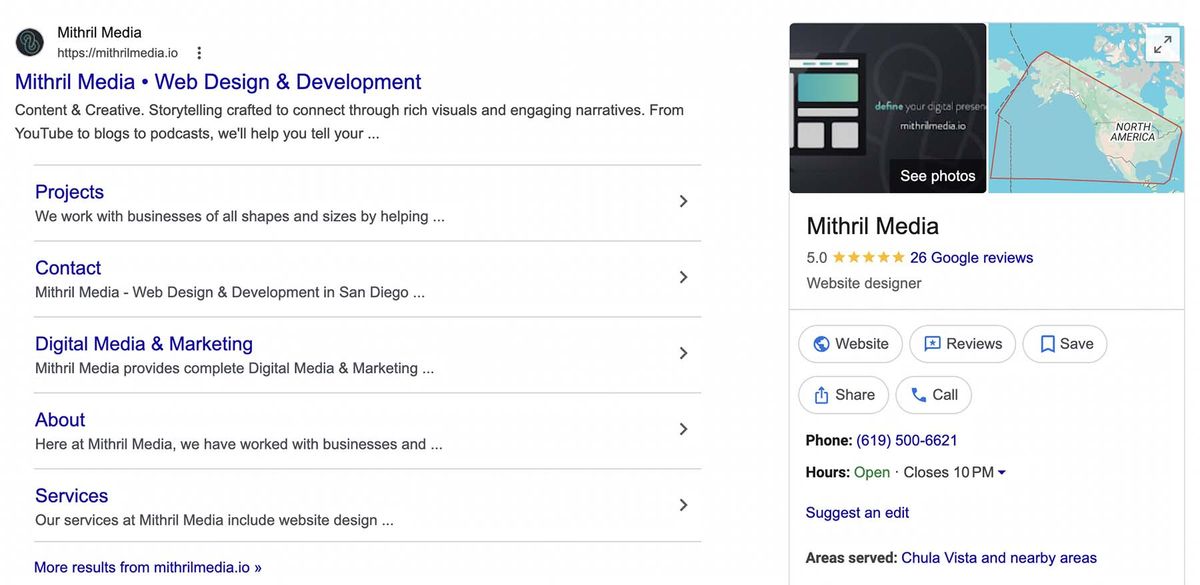
Google has also made the multi-entry-point nature of search more visible through sitelinks. When someone searches for a business by name, Google will often display not just the homepage but a cluster of direct links to interior pages such as services, contact forms, specific resources, etc. All of these are visible at once in the search results. Google's own documentation on sitelinks describes the intent clearly: these links exist to help users "quickly find the information they're looking for" without navigating through the site. The visitor who clicks a sitelink to your services page has never seen your homepage.
But all of this is the context before AI search. The terrain has shifted further.
The AI Search Problem and Opportunity
The arrival of AI-powered search tools has fundamentally changed the relationship between search queries and page destinations. When a user asks ChatGPT, Claude, or Google's AI Overviews a question and gets a direct answer, that answer is often accompanied by citations and source links pointing to specific pages deep within websites. The user who clicks a citation link from an AI response is not arriving through your homepage. They may not even know the name of your organization before they land on your page.
Research published by SE Ranking found that AI-referred web sessions grew 527 percent year-over-year and that visitors arriving from AI platforms spend, on average, 67.7 percent more time on the pages they land on compared to visitors from traditional organic search. These are highly engaged visitors. They came with a specific question, were pointed to a specific answer, and are actively reading. That makes the first impression made by the page they land on consequential in ways that a casual homepage visit often is not.
Google's own AI Overviews feature now appears in roughly 35 percent of U.S. desktop searches, and its effects on click-through behavior are significant. According to data published by Dataslayer, organic click-through rates dropped 61 percent for queries where an AI Overview appeared. The clicks that do happen are increasingly concentrated on the pages cited within the AI response - pages that, again, may sit anywhere in a site's architecture.
What this means is not that organic search is dying or that AI search is something to fear. It means that the pages receiving traffic from these sources are under new pressure to perform independently, without the orienting scaffold of a homepage visit.
What Every Page Needs to Do
The Nielsen Norman Group, whose research on web usability has set the standard for the field for decades, has written about this directly. Their work on "you-are-here" navigation makes the point plainly. Each page on a website could be the first page a visitor sees, and the design of every page should reflect that. Visitors need enough context to understand where they are and proceed toward their goals, regardless of how they arrived.
This puts the weight of three distinct obligations on every page of a website.
Orientation
A visitor who arrives on an interior page through a search result or AI citation needs to understand immediately whose website they are on and what that organization does. This does not require a homepage-length introduction on every page. It requires a clear logo, a consistent visual identity, and a navigation structure that communicates the site's scope at a glance. When those things are absent, visitors have no natural path forward and no reason to stay.
Context
Interior pages are not isolated. They exist within a larger content and service structure, and the best-performing pages make that structure visible and navigable. A visitor who lands on a blog post about website security should have a clear, easy path to the services that address website security. A visitor who lands on a grant application page should be able to navigate immediately to eligibility criteria, past recipients, and contact information. The page should do its specific job and then hand the visitor off to what comes next.
Brand
Every page represents your organization to someone who may know nothing about it. The tone, the visual design, the quality of the content, and the care taken with the writing function as a first impression, every time, on every page. An organization that treats its homepage as the face of the brand and its interior pages as afterthoughts is, in practice, presenting an inconsistent and sometimes contradictory identity to the majority of its visitors.
The Two-Audience Problem
The stakes of the “every-page-is-a-landing-page” principle are highest when a website serves more than one distinct audience. When different visitors arrive with fundamentally different needs, different vocabularies, and different definitions of a successful visit, the importance of good data architecture is compounded.
HNRNP Family Foundation is a nonprofit organization focused on hnRNP-related neurodevelopmental disorders. Its website serves two audiences that are very different from each other: families navigating a rare disease diagnosis, and scientists and medical professionals seeking research resources, grant opportunities, and clinical information.
These two groups are not interchangeable. A parent who has just received a diagnosis for their child and is searching for support resources is using different language, arriving through different search queries, and carrying a different emotional weight than a neurologist researching hnRNP protein function or a researcher looking for funding opportunities. Their definitions of a "useful website" are almost entirely distinct.
And yet both of them are likely to arrive on an interior page first.
A family might find the site through a search query like "hnRNP diagnosis support" and land directly on a family resources page. A researcher might arrive through a citation in an AI-generated overview of rare disease research funding and land on a grants page. Neither of them is starting at the homepage, and neither of them can be assumed to have context about the other audience or the broader mission of the organization.
This creates a navigation and clarity challenge that the homepage alone cannot solve. The family that lands on a grants page needs to understand immediately that this is not their section and that their section exists and is easy to find. The researcher who lands on a family support page needs a clear path to the scientific content without having to wonder if such content even exists on this site.
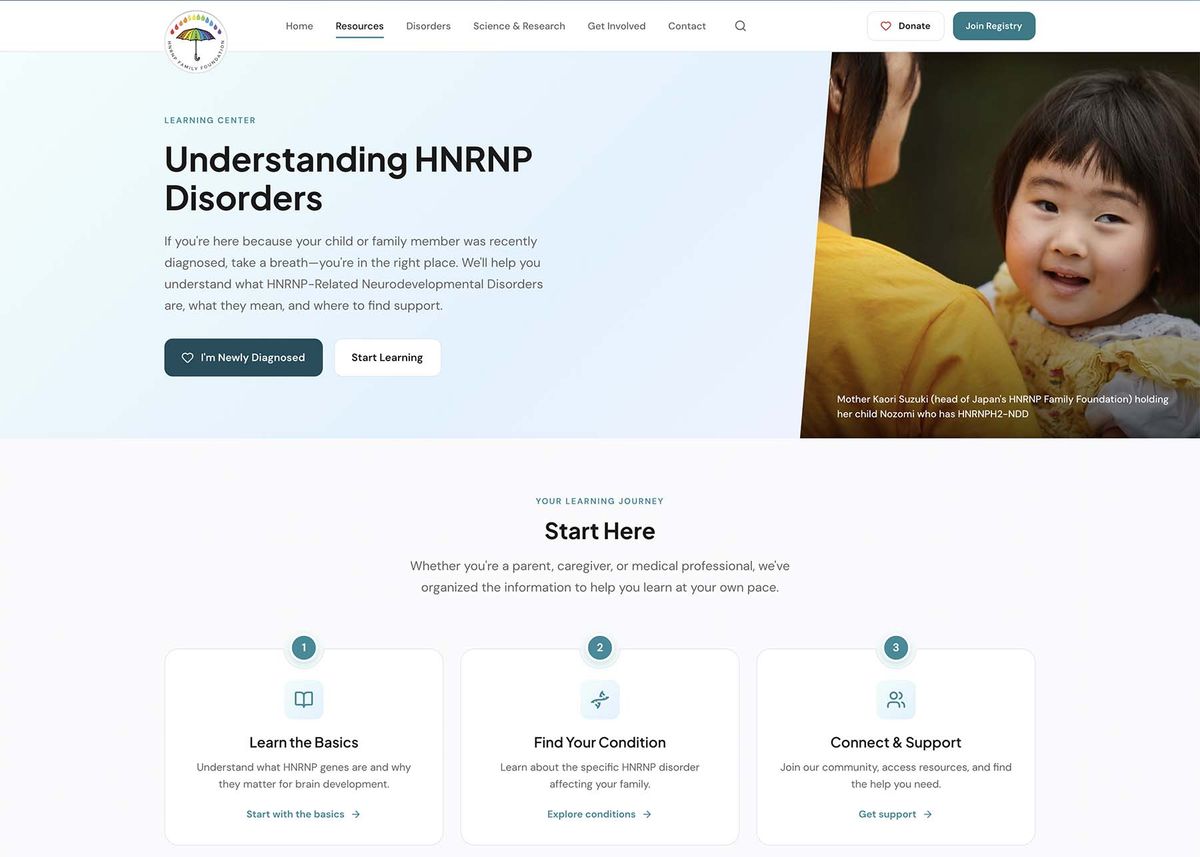
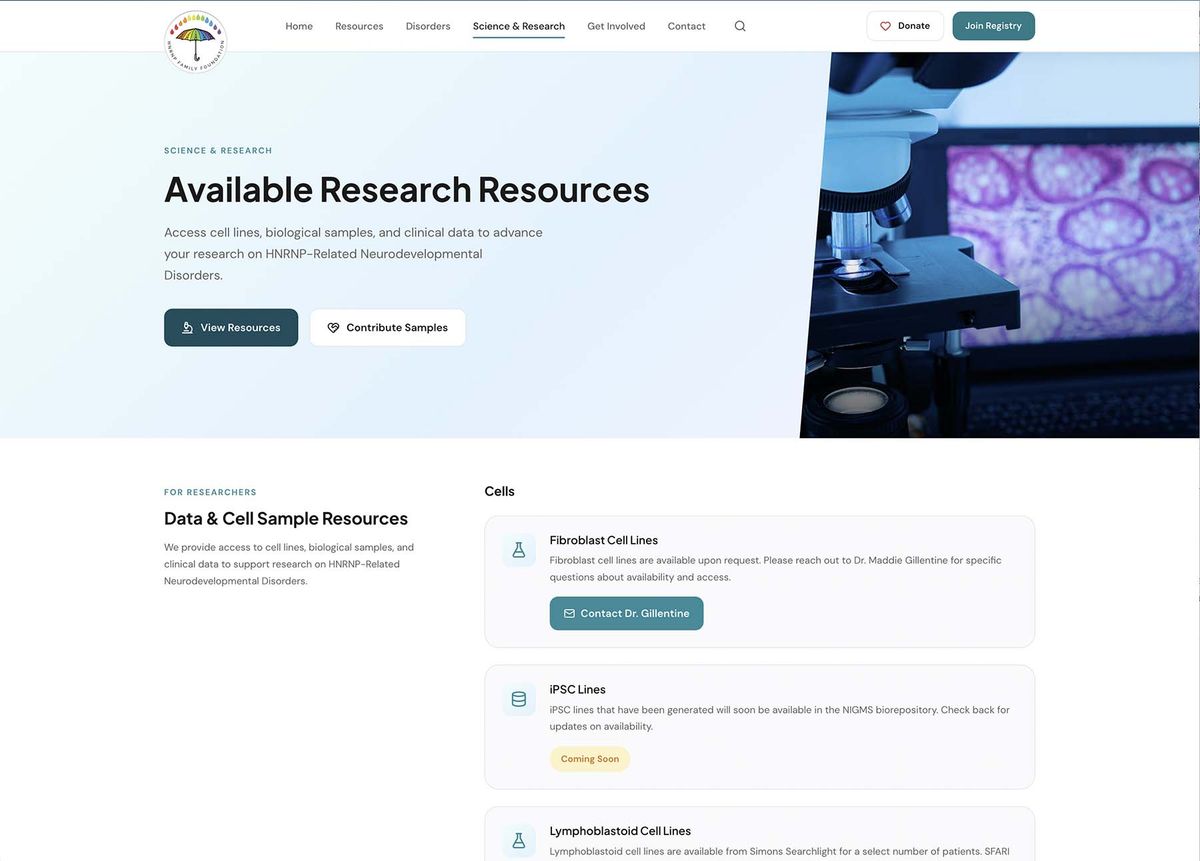
The solution is not two separate websites, though some organizations in similar positions have made that choice. The solution is a site architecture and navigation system that makes the dual-audience nature of the organization visible and navigable from any page. Clear audience pathways in the global navigation - "For Families" and "For Researchers" as distinct sections with distinct entry points - give both audiences a quick way to orient themselves regardless of where they entered. Consistent branding and messaging across both sections communicate that both pathways are supported by the same mission and the same organization.
As you can see in the examples above, the overall structure and layout of the page feels consistent, but the choice of images, language, calls to action and context are all varied for the specific audience.
What makes this example instructive beyond the nonprofit context is that many organizations serve multiple audiences without fully acknowledging it in their site design. A law firm serves both potential clients and potential referring attorneys. A healthcare system serves patients, physicians, and employers. A university serves prospective students, current students, faculty, alumni, and employers. Each of these groups arrives with different questions, uses different language in search, and will be routed by AI and traditional search to different pages. A site that only accounts for this at the homepage level is leaving the majority of its entry points underserved.
Navigation as Infrastructure
The navigation system of a website is often treated as a design element. Something to be styled and positioned, with the assumption that the structure itself is self-evident. The research suggests this is a costly misunderstanding.
Nielsen Norman Group's analysis of global navigation is direct about the consequences of removing or degrading it: when users arrive on an interior page and cannot quickly understand the full scope of a site, they are significantly more likely to leave without exploring further. Navigation is not decoration. It is the mechanism by which a visitor who arrived looking for one thing discovers that other relevant things exist.
Practically, this means that every page should carry the same header and navigation structure, with a clear indication of where the current page sits within the larger site. It means that section-level navigation should reflect the natural groupings of content, not the internal organizational chart of the company that built the site. It means that CTAs such as contact prompts, next-step suggestions, and related content links should appear on every page, because a visitor who is ready to take action may be ready on any page, not just the homepage or a dedicated contact page.
It also means that every page should be tested not only for how it looks and loads, but for what a stranger learns about the organization by reading it. The question is simple: if someone found only this page, would they know who you are, what you do, and what to do next? If the answer is anything short of yes, the page has more work to do.
Designing for the Actual Web
The web has never worked the way the front-door mental model describes. What is new is the speed and scale at which AI-powered search is accelerating the distribution of entry points across a site's full content architecture. The homepage will always matter. But it is no longer the primary context in which most visitors form their first impression of an organization.
The practical response to this is not a massive redesign project or a complete rethinking of content strategy. It is a shift in orientation by treating every page with the same intentionality that most organizations currently reserve for the homepage and a handful of primary landing pages. Clear identity. Consistent navigation. Visible pathways for every audience the site serves. Content that earns trust before it asks for action.
A website built with that orientation is not just better prepared for AI search and changing user behavior. It is more useful to the visitors it already has, regardless of how they found it.
If your website was built around a homepage-first experience, it may be time to look at how the rest of your pages are performing. Mithril Media audits and rebuilds site architectures designed for the way people actually find and navigate websites today.
Book a MeetingFollow along on Substack to receive the latest articles in your inbox