Structured Data is The Quiet Advantage Most Small Businesses Are Missing
Structured data is one of the most effective and least understood tools in small business SEO. It tells search engines exactly what your business does, where you are, and why someone should click. Most small business websites do not have it. Here is how to change that.
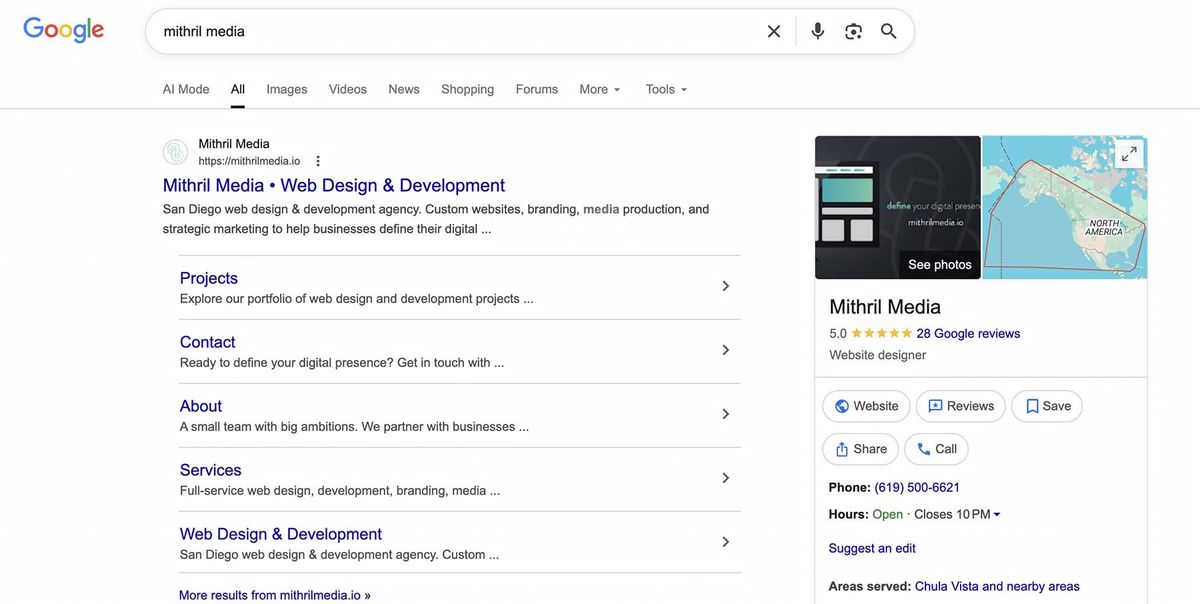
If you search for a local business on Google, you have probably noticed that some results look different from others. Some show star ratings directly in the search results. Some display business hours, a phone number, and a street address without you having to click anything. Some have expandable FAQ sections right there on the results page.
These are not random. They are the result of something called structured data, a layer of code that sits behind your website and tells search engines exactly what your business is, what you do, and how to display that information to people searching for it.
Most small business websites do not have structured data. According to various industry analyses, the vast majority of small business sites either lack it entirely or have it implemented incorrectly. This represents one of the largest missed opportunities in small business SEO, because structured data is not expensive, it is not complicated to implement, and the results are measurable.
What Structured Data Actually Is
Every website is built with code that browsers read and render into the pages you see. Structured data is an additional layer of code, written in a format called JSON-LD, that speaks directly to search engines. It organizes your business information into a standardized vocabulary defined by Schema.org, a collaborative project maintained by Google, Microsoft, Yahoo, and Yandex.
Think of it this way. When a human visits your website, they can read your "About" page and understand that you are a solar installation company in Eureka, California, that you have been in business since 1980, and that you are open Monday through Friday. A search engine can read the same page, but it does not understand context the way a human does. It sees text on a page. Structured data translates that text into a format that search engines can process with certainty. Instead of guessing that "818 Broadway St." is your address, the search engine knows it is your address, because the structured data explicitly labels it as such.
Why It Matters More Than Ever
Structured data has always been useful, but its importance has grown significantly over the past two years for a few reasons.
First, Google's search results have become increasingly visual and information-rich. Rich results, the enhanced listings that display ratings, hours, pricing, and other details directly in search, now account for a significant share of clicks. A study cited by Google found that Rotten Tomatoes saw a 25% higher click-through rate on pages with structured data. Nestle measured an 82% increase for pages showing as rich results compared to standard listings.

Second, AI-powered search tools like Google's AI Overviews pull information from structured data to construct their answers. As search becomes less about clicking through ten blue links and more about getting answers directly, having your business information clearly structured gives you a better chance of being the source those tools reference.
Third, voice search relies heavily on structured data. When someone asks their phone "What solar company is open near me right now?" the answer is pulled from structured data that includes location, hours, and service type. Without it, your business is invisible to that query.
The Schema Types That Matter Most for Small Businesses
There are hundreds of schema types defined on Schema.org, but small businesses can get significant value from a handful of them. Here are the ones that will make the biggest difference.
LocalBusiness
This is the foundation for any business with a physical location or a defined service area. LocalBusiness schema tells Google your business name, address, phone number, hours of operation, geographic coordinates, and the services you offer.
When we built the website for Six Rivers Solar, a solar installation company serving Northern California's Humboldt County, we implemented LocalBusiness schema that includes their full address in Eureka, their phone number, their Monday-through-Friday business hours, and their four core service categories: residential solar, commercial solar, battery storage, and off-grid systems. It also specifies their service area across Humboldt, Mendocino, Del Norte, and Trinity counties.
Here is a simplified example of what LocalBusiness JSON-LD looks like:
{
  "@context": "https://schema.org",
  "@type": "LocalBusiness",
  "name": "Your Business Name",
  "address": {
    "@type": "PostalAddress",
    "streetAddress": "123 Main Street",
    "addressLocality": "San Diego",
    "addressRegion": "CA",
    "postalCode": "92101"
  },
  "telephone": "+1-619-555-0100",
  "openingHours": "Mo-Fr 09:00-17:00",
  "url": "https://www.yourbusiness.com"
}
This markup takes five minutes to write and can be the difference between appearing in Google's local pack and being absent from it entirely.
Organization
Organization schema establishes your brand identity in Google's knowledge graph. It includes your business name, logo, social media profiles, and contact information. For the Mithril Media website, we use Organization schema alongside LocalBusiness to give Google a complete picture of who we are, including links to our social profiles and our logo.
The distinction between Organization and LocalBusiness is worth noting. If your business serves customers at a physical location, use LocalBusiness (which inherits from Organization). If you are a remote or online-only business, Organization alone may be more appropriate.
FAQPage
FAQPage schema is one of the highest-value schema types for small businesses, and it is one of the easiest to implement. If your website has a frequently asked questions section, wrapping it in FAQPage schema can cause those questions and answers to appear as expandable accordions directly in Google search results.
On the Mithril Media site, we have FAQPage schema covering eight common questions our clients ask, from "How much does a website cost?" to "Do I own my website?" When those questions match what someone searches for, Google can display our answers right in the results, before the searcher even clicks through.
Here is what a simple FAQPage schema looks like:
{
  "@context": "https://schema.org",
  "@type": "FAQPage",
  "mainEntity": [
    {
      "@type": "Question",
      "name": "How much does a new website cost?",
      "acceptedAnswer": {
        "@type": "Answer",
        "text": "Our standard websites start at $8,500. The final cost depends on the scope and complexity of the project."
      }
    }
  ]
}
Review and AggregateRating
If your business has customer reviews, Review and AggregateRating schema can display star ratings directly in search results. This is one of the most visually impactful schema types, because a five-star rating in search results draws the eye immediately.
On our own site, we have nine individual Review schemas alongside an AggregateRating showing a 5-out-of-5 average. Those gold stars in search results are a trust signal that earns clicks.
How to Check If Your Site Has Structured Data
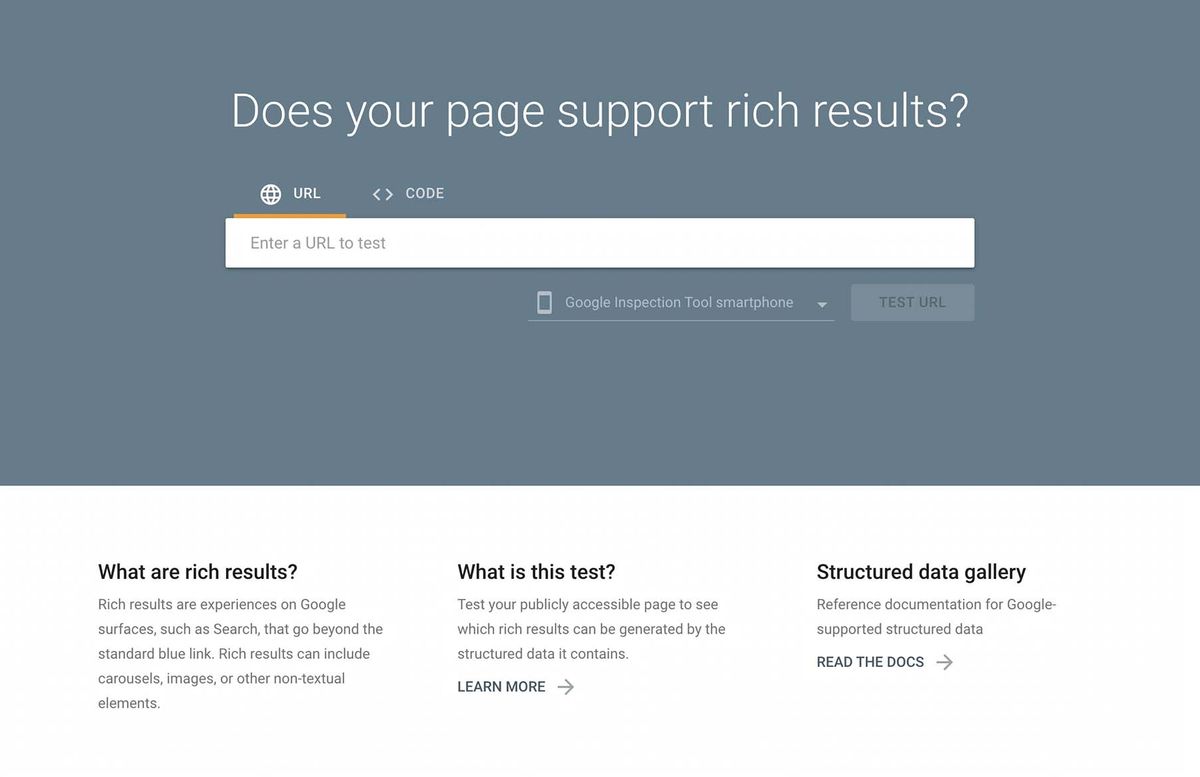
Before implementing anything new, start by checking what you already have. Google provides a free tool for exactly this purpose.
Go to Google's Rich Results Test and enter your website URL. The tool will scan your site and report every piece of structured data it finds, along with any errors or warnings. If the results come back empty, you now know the size of your opportunity.
You can also use Google Search Console, which has a dedicated "Enhancements" section that tracks your structured data over time and alerts you to any issues.
How to Add Structured Data to Your Site
There are several approaches, depending on your technical comfort level and the platform your website runs on.
If You Use WordPress
Several WordPress plugins make structured data implementation straightforward. Yoast SEO and Rank Math both include built-in schema markup features. For more granular control, a plugin like Schema Pro lets you define custom schema types for different page templates. Install the plugin, configure the relevant schema types for your business, and the plugin handles the JSON-LD injection into your page headers.
If You Use a Custom or Headless CMS
If your site is built on a framework like Next.js, Sanity, or another modern stack, structured data can be added directly to your page templates as a JSON-LD script tag in the document head. This is the approach we use for most of our client sites, because it gives us full control over what data is included and how it is structured.
If You Want to Start Simple
Google's own Structured Data Markup Helper walks you through the process visually. You paste in your URL, highlight the relevant elements on your page, and the tool generates the JSON-LD for you. Copy that code into your page's head section, and you are live.
Whichever method you use, run the Rich Results Test again after implementation to confirm that Google can read your markup correctly.
Common Mistakes to Avoid
Structured data is powerful, but it needs to be implemented correctly. A few things to watch for.
Do not include information in your structured data that is not visible on the page. Google's guidelines are clear on this. If your structured data says you are open until 9 PM but your website says 5 PM, that is a policy violation that can result in your rich results being revoked.
Keep your data current. If your business hours change seasonally, your structured data needs to change too. Stale structured data is worse than no structured data, because it actively misleads both search engines and the people relying on them.
Use the most specific schema type available. If you are a restaurant, use the Restaurant schema type rather than the generic LocalBusiness. If you are a dental practice, use Dentist. The more specific you are, the more useful the data is to Google.
Test after every change. The Rich Results Test is free and fast. There is no reason not to validate your markup every time you update it.
The Compounding Advantage
Structured data is one of those rare SEO investments that compounds over time. Once it is in place, it works for every search query, every day, without any additional effort. As Google continues to evolve its search results toward richer, more visual formats, and as AI-powered search tools become more prevalent, the businesses that have clean, comprehensive structured data will have a meaningful advantage over those that do not.
The Search Engine Journal reported in early 2026 that despite some changes to which schema types Google actively supports, the company's commitment to structured data as a core search signal has only strengthened. The businesses that invest in it now are building an advantage that will widen, not narrow, over the coming years.
For most small businesses, adding structured data is a weekend project that pays dividends for years. It is one of the few things in SEO where the effort is small, the cost is low, and the benefit is both immediate and lasting.
If you are not sure whether your site has structured data, or if you want to make sure it is set up correctly, we can help. We build structured data into every website we create, and we are happy to audit yours.
Get a Free Website AuditFollow along on Substack to receive the latest articles in your inbox