What Your Website Is Actually Saying About You
Your website is communicating with every visitor, whether you've thought about it or not. Here's what it might be saying and how to take control of the message.

5 seconds. That’s it. That’s all it takes for a new visitor to your website to decide whether to stay or leave. They haven't read a word of your copy yet. They may not have scrolled at all. But they have already formed an opinion about you. About whether you are professional or trustworthy or current, and frankly, whether you’re worth their time.
We are wired to make rapid assessments based on visual cues, and websites are no exception. Your website is making an impression, whether good or bad, as soon as it loads for the end user. So, what can you do to make sure it’s making the right impression?
The Silent Conversation
Every design choice on your website is a form of communication. A cluttered layout says you haven't thought carefully about your visitor's experience. Outdated fonts or inconsistent color schemes suggest a business that hasn't kept up with the times. A site that loads slowly on a mobile phone signals that you haven't considered how most people actually browse the internet.
None of these messages are intentional. That's precisely the problem. Most business owners build a website once, focus on getting the content right, and assume the work is done.
But websites are not static documents. They exist in a world where design standards evolve, competitors improve, and visitors carry increasingly sophisticated expectations about what a credible online presence looks like.
Your website is having a conversation with every person who visits it, so it is critical to ensure that you are the one directing that conversation.
What Visitors Are Actually Reading
When someone lands on your site for the first time, they're running a rapid, largely unconscious evaluation. They're asking: Does this look like a real business? Does it look like one that takes itself seriously? Is the information I need easy to find?
The specific signals they're reading include the quality and consistency of your visual design, the clarity of your core message, how quickly the page loads, and whether the site feels functional and current on whatever device they're using.
A website that looks thrown together, or that hasn't been updated in years, is telling visitors something about how you operate. It may be unfair. You may run an exceptional business with loyal customers and a great reputation. But the visitor encountering you online for the first time doesn't know that yet. The website is all they have.
Every time we start on a new project here at Mithril Media, one of the most important conversations we have is not about what you, as our client, want from your website (yes, that is important too), but instead, what your end-user wants from your website. If there is misalignment in your expectations of what your website should be delivering and what your users actually want and need, everyone bound to walk away empty-handed and disappointed.
The Business Consequences
The gap between how a business actually performs and how its website represents it is one of the most common problems in small and mid-size business. A contractor with twenty years of experience and an impeccable track record loses potential clients to a newer competitor whose website looks sharper and more professional. A restaurant with outstanding food gets passed over because its website makes the place look closed or chaotic.
The good news is that most of what your website says about you can be controlled. It is not a matter of having the most elaborate or expensive site on the internet, but simply a matter of intentionality. By making deliberate choices about how you present yourself online and ensuring those choices actually reflect the quality of what you do, you can effectively signal to your visitors that you are capable of solving the problem they need solved.
What it Looks Like in Practice
Every website we build starts with the user and understanding what they need from the website. Take, for example, a recent website we built for the HNRNP Family Foundation. Their organization has two primary audiences: recently diagnosed families and a scientific community that researches the rare disease they support.
The way information is delivered to these two audiences is a stark contrast. For a moment, put yourself in the shoes of a parent of a child who was just diagnosed with a disease with only ~1000ish known cases worldwide. The emotions are overwhelming. On the other hand, researchers and medical professionals are there seeking information as quickly and deliberately as possible.
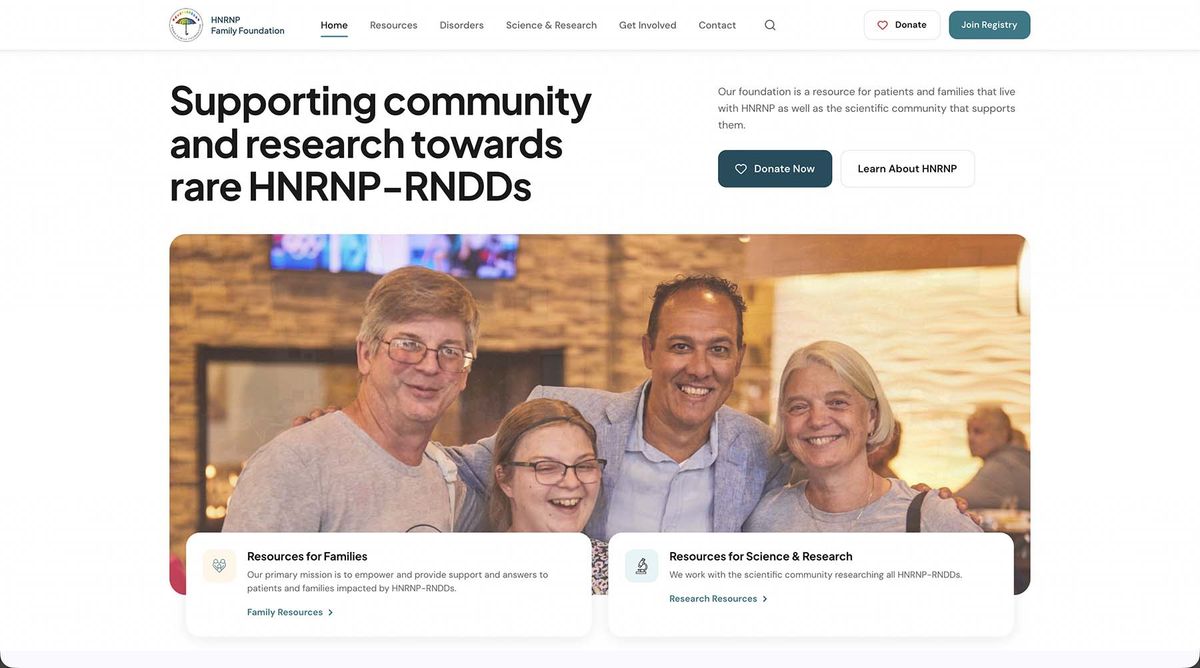
These are two very different buckets of users, but each is equally important to the foundation.
With this in mind, we created a clear separation between the paths users could take. We made it easy to choose which path to take and we made sure that once you’d chosen a path, the information was delivered in a way that resonates with the target audience of that path.
Science & research is deliberate and to the point. Less emotionally driven, more solution-oriented. Lots of scientific and medical terminology.
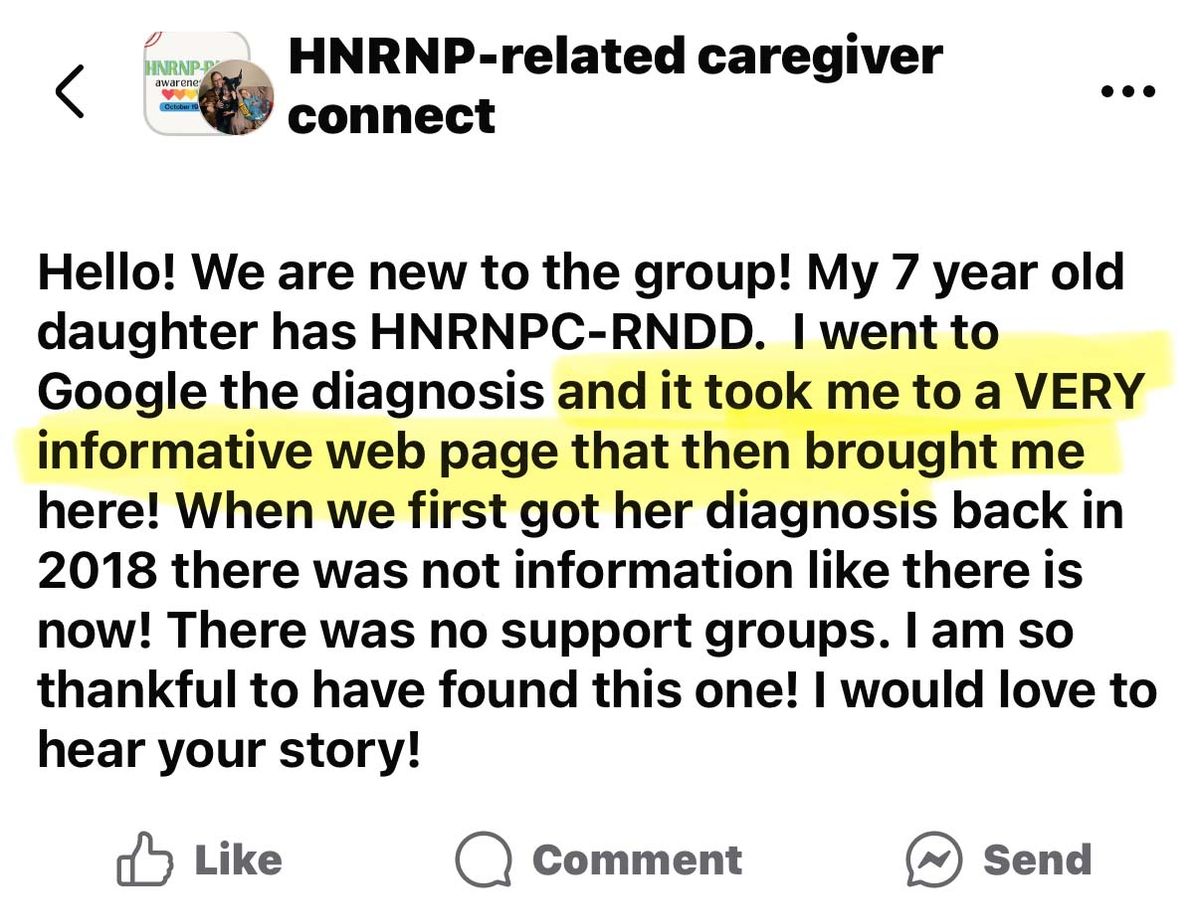
For areas of the website targeted to families, the language and information is presented with the expectation that someone visiting the page has limited - if any - knowledge of what an HNRNP-RNDD actually is. We lean more into the emotions that the family is feeling, affirming that they have reached a safe space of people who understand what they are experiencing.
Taking Back the Narrative
So, how do you begin the process of improving your website? The first step is an honest assessment. Visit your own website as though you are a stranger seeing it for the first time. Ask yourself what impression it makes before you've read a single line of copy. Notice whether the design feels current or dated, whether the layout makes your most important information easy to find, and whether the overall look matches the quality and professionalism of your actual work.
If there's a gap between what you see on the screen and what you know to be true about your business, that is the problem worth solving. Not because appearances are everything, but because in the brief window you have to earn a visitor's attention, appearances are often the only thing.
A website that accurately represents what you do and who you are is not a luxury. It is a baseline expectation of operating a business in a digital world.
Ready to take a hard look at what your website is saying about you?
Book a MeetingFollow along on Substack to receive the latest articles in your inbox